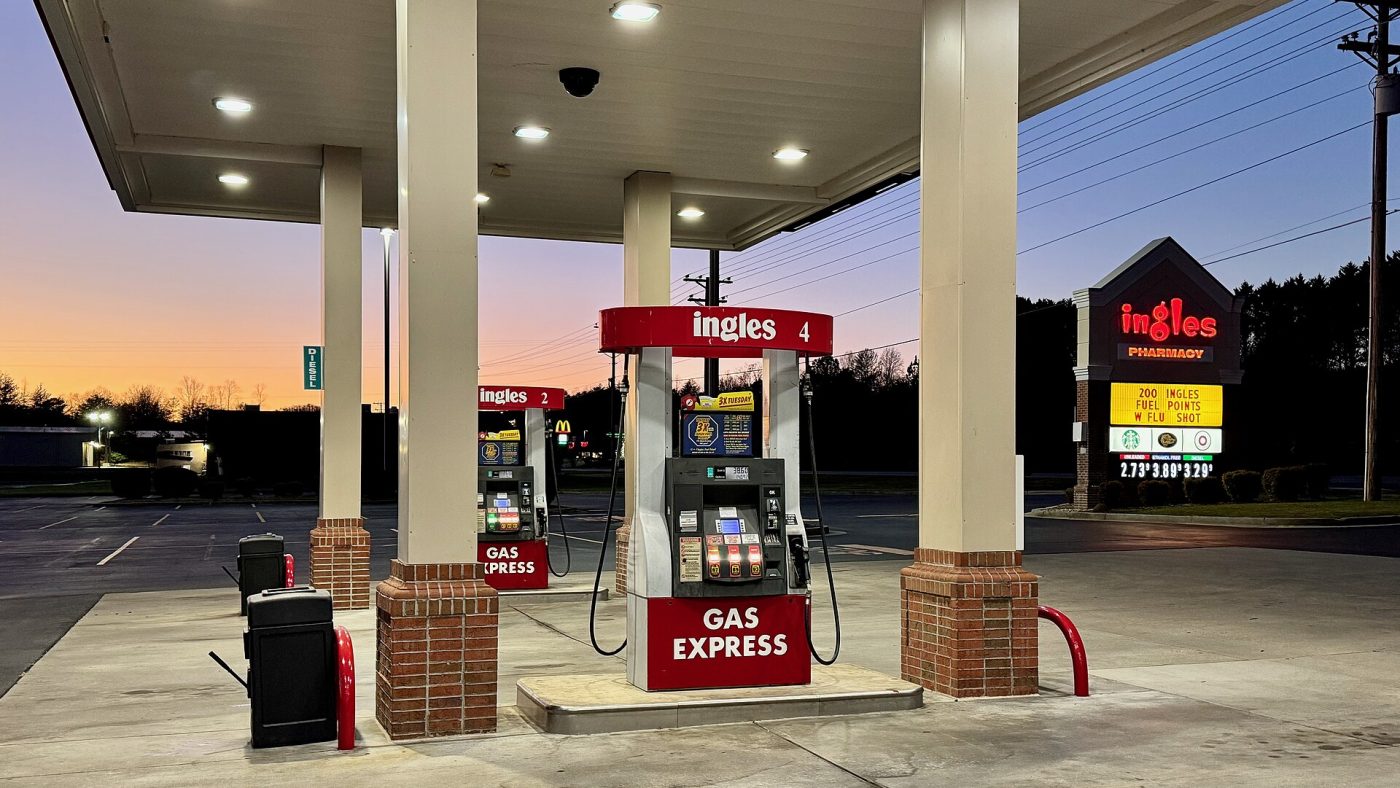
The national average price for a gallon of regular gasoline was $4.07 on Nov. 6, according to AAA, down about 30 cents from a month ago but roughly $1 higher than a year ago. Prices have eased for several weeks, yet drivers are still paying far more than at this time last year, and diesel is even further above its year-ago level.
The national numbers
| Regular gasoline | Diesel | |
|---|---|---|
| Nov. 6, 2026 | $4.0688 | $6.2305 |
| Yesterday | $4.1003 | $6.2564 |
| One week ago | $4.2046 | $6.3204 |
| One month ago | $4.3685 | $6.3151 |
| One year ago | $3.0844 | $3.7093 |
Regular gasoline is down about 13.6 cents from a week ago and about 30 cents from a month ago. Compared with a year ago, it is up about 32%. Diesel is up about 68% from a year ago, a larger jump that matters for trucking, farming and shipping costs, which feed into the price of goods.
The most and least expensive states
AAA’s state averages for regular gasoline show a wide gap across the country.
| Most expensive | Price | Least expensive | Price |
|---|---|---|---|
| California | $5.80 | North Carolina | $3.32 |
| Hawaii | $5.64 | Georgia | $3.52 |
| Nevada | $5.14 | Texas | $3.55 |
| Washington | $5.09 | South Carolina | $3.57 |
| Oregon | $4.71 | Louisiana | $3.64 |
A driver in California is paying about $2.48 more per gallon than a driver in North Carolina. For a 15-gallon fill-up, that is a difference of more than $37.
Why prices have been falling
Crude oil is the largest driver of pump prices. CNBC reported this week that Brent crude fell 8.7% on Wednesday to below $100 a barrel, a sharp one-day move. If crude stays lower, retail gasoline prices typically follow with a lag of days to weeks. But oil prices are volatile, and a single day’s drop does not guarantee further declines at the pump. Prices also vary with local taxes, refinery issues and regional supply.
What it means for inflation
Gasoline is one of the most visible prices in the consumer price index. High energy prices have helped push the headline inflation rate to 3.7% in September, well above the 2.6% core rate that excludes food and energy. If pump prices keep falling, headline inflation could cool in coming months. We explain what to watch in our preview of the October inflation report, due Tuesday, Nov. 10.
How to save on gas
- Compare prices. Use a price-tracking app or AAA’s gas price tools; prices can differ by 30 cents or more within a few miles.
- Use rewards. Grocery-store fuel points and fuel-rewards credit cards can reduce the cost per gallon.
- Keep tires inflated to the pressure listed on the driver’s door jamb. Under-inflated tires reduce fuel economy.
- Slow down. Fuel economy generally drops at highway speeds above about 50 mph.
- Pay attention to timing. Prices in many areas rise on weekends and before holidays.
Holiday travel
Thanksgiving is on Nov. 26. Gas prices are a big part of the cost of road trips, and AAA is expected to release its Thanksgiving travel forecast in the coming weeks. For timing advice, read our guide to the best and worst days to travel and our report on holiday airfares.
Sources
- AAA: national and state gas price averages (Nov. 6, 2026)
- U.S. Bureau of Labor Statistics: Consumer Price Index (September 2026)
- CNBC energy and market coverage (Nov. 6, 2026)
Prices change daily. Figures are AAA’s national averages for Nov. 6, 2026.